Wednesday, 9 September 2009

TPB Review: The Walking Dead Volume 1


The Walking Dead Volume 1: Days Gone By - Collects The Walking Dead #1-6 By Kirkman / Moore

As a huge Robert Kirkman fan I have always felt like something of a fraud having never read arguably his most critically acclaimed work, The Walking Dead. For this reason when I noticed the first volume in Forbidden Planet for just £7.50 I didn't need to think about it for too long before purchasing it.
For those who don't know, the series features a premise almost identical to the film '28 Days Later', the protagonist of the series, small town police officer Rick, waking up alone in a hospital and slowly realising that the world is now populated by zombies. Eventually hooking up with a group of survivors the series then follows the groups attempts to survive.
Kirkman's strength, as usual is his brilliant characterisation and dialogue. The main draw of the series, rather than being the zombie action are the interactions between the brilliantly varied cast, all of whom are very believably written. While pacing is initially very slow it picks up a lot by the midway point and by the end I was hooked.
I was initially slightly put off by the black and white art, done by Tony Moore, but it suits the series very well. Moore's art, while being slightly cartoony is able to express the characters emotions brilliantly, and is always pleasing to look at it. It's a shame that this is the only story arc which he drew.
Overall I would highly reccomend this book, judging from the cheap price I managed to pick it up for it should be relatively inexpensive, and is a brilliant introduction to a series that is often described as Kirkman's best work. I look forward to volume 2!

A

Sunday, 23 August 2009

Marvel Team Up: The Golden Child Review

Firstly, an apology. In the last couple of months I have not been able to write nearly as much on this blog as I would have liked. The reasons for this are many, exams and holidays being at the forefront. However, I am hoping that normal service will be resumed from now and I will be able to start churning out articles and reviews faster than ever before!

Marvel Team Up (V3) #1-6 By Kirkman / Kolins

Now that that is out of the way, onto the review, of Marvel's most recent attempt to relaunch the Marvel Team Up brand. Unlike with past series, which tended to focus on Spider-Man, Marvel promised that this time round the series would be centred on a wider variety of heroes.
The main story arc running through the opening six issues centres around a young boy with mutant abilities, and the attempts of a not-so-familiar antagonist to control his abilities for his own ends. Despite Marvel's assurances to the contrary Spider-Man is a chief protagonist in the story, along with Wolverine, The Fantastic Four,
Doctor Strange and Captain America among others.
Robert Kirkman is one of my favourite writers, and I think it's a shame that he no longer works for Marvel. As this arc shows, he clearly has a good grasp on the Marvel Universe. His use of continuity is wonderful - in an age where many writers seem at loathe to mention other writers work Kirkman is never afraid of referencing goings on in other titles. His characterisation and dialogue are both generally excellent, with his Spider-Man and the banter between the Fantastic Four being particularly enjoyable.
The pacing of the story is ok. Decompression is generally seen as a bad thing in modern comics, but Kirkman packs so much plot into these six issues that sometimes its difficult to keep track. The use of subplots is good, and it is pleasing to see some often neglected Marvel characters, but I would have preffered Kirkman to scale it down a little. As it is, the story often feels a little messy.
Kirkman's love for the Silver Age and Silver Age methods of storytelling is something that is made clear in most of his works, especially these six issues. As with his frantic pacing, sometimes it works well and sometimes less well. Much of the plot is brilliantly zany, in a clearly silver age way. However, the villainous dialogue certainly needs work and feels very dated.
Scott Kolin's artwork is also a mixed bag. His cartoony style is very dynamic and pleasing to look at, but is sadly often rushed.
Overall this story arc is not Kirkman's best work. while still being a good read. He is clearly a good writer, and the ideas in 'The Golden Child' are excellent, if sometimes not as well executed as they could be. It seems to me as if Kirkman was possibly trying a little too hard with this arc. With so many ideas, characters and subplots thrown into the ring it is just a bit, well...messy.

C+

Thursday, 2 July 2009

JMS on Amazing Spider-Man


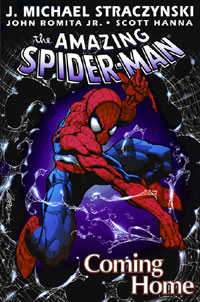
Amazing Spider-Man (V2) #30-35, 37-38 By Straczynski / Romita Jr.

JMS's run on Amazing Spider-Man has never been one that I am too fond of. I have been never been interested in his mystical reimagining of Spidey's origin, and I thought that his run sorely missed some classic Spider-Man villains. However, after thoroughly enjoying his current Thor relaunch, and his film The Changeling I have decided to re-read his run, and see if I can gain any more enjoyment from it, starting with his opening seven issues (discounting #36 which was a special 9/11 issue).

After reading the opening to his run my opinion is...much the same. His proposed new origin for Spider-Man is still overly convoluted and ill fitting for the character. It does raise some interesting points, but reading the issues with the benefit of hindsight I know that the plotline ultimatley doesn't go anywhere. Ezekiel however is an interesting character, and it's a shame that no other writers have really explored the character. I honestly can't remember how his storyline was resolved and so I am genuinely intrigued about where JMS is going with him. Morlun, for the purposes of this storyline was ok, not great. The fight scenes (excellently drawn by JrJr) are spectacular, and the idea of a villain with the sole purpose of destroying Spider-Man is a good one. JMS does well establishing a villain who had never appeared before as a genuine threat, if occasionally in a somewhat overzealous manner. Spider-Man's frequent utterances about how powerful he is just come across as JMS bigging up his creation. It was also good to see Peter using his all too frequently ignored scientific abilities to take him down.

Peter's new job at the school was also a welcome move, and a believable one for the character. Taking pictures of himself was starting to wear a little thin after 40 years. This was easily my favourite element that JMS introduced, and I genuinely felt that some of Peter's fellow Midtown High teachers and students had potential as characters, and were sadly underused. Ultimately this element of JMS's run has now been jettisoned by Brand New Day. Sigh.

Aunt May's characterisation is JMS's run has been lauded by many as a welcome move for the character. However to me it comes a little out of nowhere. A woman who for 40 years has been portrayed as well...A doddering old fool, is now suddenly a strong, witty woman. Obviously characterisation in comic books is liable to fluctuate, but this was perhaps a step too far. I'm not really going to comment on her learning Peter's secret identity, as however well done it was by JMS, it now means virtually nothing.

JrJr's art is also something I am going to skim over. When he pencils a book you know what you are going to get. Some people hate his style, I quite like it, and felt that it definitely enhanced the quality of these issues, the fight scenes in particular.

Overall, these issues are much as I remember them. A solid start to JMS's run, but plagued by the irritating totem storyline that never really went anywhere after this story. JMS definitely has a strong sense of what makes the Webhead tick, evident from the frequent, strongly written monologues that these issues are littered with, it's just a shame that this is undermined by story elements that do not belong in Spider-Man comic books. A mixed bag.

B+

Thursday, 7 May 2009

X-Men Origins: Wolverine Review


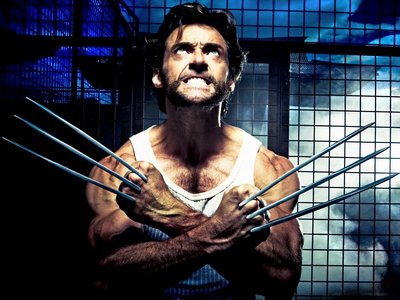
With the success of the X-Men series of films, and the popularity of the title character this movie has been pretty much certain for some time. However, whether it would be any good has been the topic of some debate, particularly after popular characters such as Deadpool and Gambit were announced to appear in the film. The director Gavin Hood was under immense pressure to do these characters justice, and in my opinion he succeeds...Just about.

The plot is fairly faithful to the comic books, and follows yes you guessed it...Wolverine's origin story, as he is enlisted in Team X and subjected to the adumantiam bonding process. The plot is decent, but many aspects of it make little sense. Sabretooth's motivations are bizarre, and are never really properly explained, causing him to be a somewhat unsatisfying antagonist for Wolverine. Wolverine himself was also somewhat bland, Hugh Jackman is a decent, likeable actor but struggles to effectively portray Logan's inner turmoil, and the struggle between man and beast that often makes him such a compelling character. Also, despite the history between the two characters there is little chemistry between them on screen, not helped by the fact that most of Sabretooth's dialogue is composed of terrible one liners. 

The rest of the cast are decent, with Will.i.am in particular impressing as John Wraith, a very minor character from the comics. Most of the others are hit and miss; Taylor Kitsch as Gambit is nowhere near as bad as he could have been, but doesn't exactly nail the cajun, his accent in particular being very dodgey. There has been a lot of furore over Deadpool's brief appearance, I'm not going to comment on the change that occurs later in the movie as it will obviously be reversed but I thought Ryan Reynolds was a good choice as the merc with the mouth, and I look forward to seeing his role expanded in possible future films. 

Lastly I have to comment on the brilliant action sequences, despite some rubbish CGI the fight scenes in this film were truly fantastic, and drag it kicking and screaming away from mediocrity. Overall a decent effort, while hardly up there with the likes of Spider-Man 2 and X-Men, far better than it could, and perhaps should have been. I would be happy to see a sequel.

B


Saturday, 11 April 2009

Is Peter Parker really an everyman?


One of Peter Parker's principal characteristics is his status as an everyman. Indeed, this was one of things that made Amazing Fantasy #15 such a breakout success back in the 60's. While the likes of Bruce Wayne and Tony Stark were billionare playboys who lived in mansions, Peter was a shy, nerdy, orphaned teen who lived with his frail aunt May and got picked on at school. This, and his subsequent troubles with girls, money and the health of his Aunt have led to him being dubbed the archetypal everyman, and this has often been seen as the key to his success as a character. One of Marvel's excuses for repeatedly attempting to jettison his and Mary-Jane's relationship has been that they want to get back to the root of his character, and that being married to a supermodel does not allow readers to relate to him. However, has this ever been the case? And if it isn't then does such a character exist?

Obviously your definition of 'everyman' depends a lot on who you are. For example people from a working class background may find it difficult to relate to a character from a middle class background and vice versa. So for the purpose of this article I am trying to be as general as possible. Peter's status as an orphan is one shared by many fictional characters, to name but a few; Harry Potter, Frodo Baggins, Bruce Wayne and Superman. There are many reasons for this, parents can tie the character down and having them dead before their adventures even start creates instant dramatic tension. While this obviously an effect storytelling device, proven by the fact that it has been used for so many fictional characters over the years, it cannot be argued that this makes the character an everyman. Now I have no actual figures to back this up, but surely the vast majority of teenagers are not orphaned, and I would guess that even fewer live with elderly relatives. However, the notion of an older relative incessantly fussing and worrying about you is definitely something that will ring true with many people, and so I suppose this makes Peter a more relatable character.

Socially, Peter is initally presented as an outcast, awkward looking, shy and picked on by his classmates. Bullying is something that has probably been experienced by most people in one way or another, just as most people will have felt like an outsider at one time or another. This feeling is particularly emphasised during the early Steve Ditko stories, where Peter is drawn as skinny, not particularly handsome, and is relentlessley picked on, first by Flash Thompson, then later by Harry Osborn and Gwen Stacy when he starts college. Despite the romantic attentions of Liz Allen and Betty Brant he is shown as unlucky in love, eventually losing Betty Brant to Ned Leeds, and often ends the stories with monologues depicting his misery and isolation. This is something I am sure most young people will be able to relate to, however melodramatic it might sound.


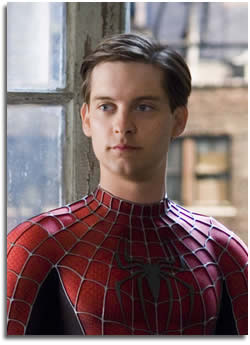
This all changed with the departure of Ditko as penciller, and the arrival of John Romita Sr as his replacement. Romita's background came in romance comics, and one of the most initially striking things about his artwork is how beautiful everyone is. Even Peter himself was giving something of a makeover, appearing as much more muscular and handsome. It could be argued that this led to a change in Lee's stories, particularly as it has since become clear that Ditko played a big part in plotting as well as pencilling. Peter became more popular, making friends with Harry Osborn and Gwen Stacy, and even managing to get Flash Thompson on his side. The introduction of Mary-Jane also meant that Peter had two beautiful young women vying for his attention. Who can honestly say they can relate to that?

This for me is where Peter lost his everyman status. Although the quality of the stories is undeniable, Peter had gone from being a socially awkward nerd to a popular, handsome ladies man. This trend continued over the years. Although Peter had his fair share of unluckiness in love, it was often self inflicted, caused by his sense of responsibility and need to play hero. I can only recall a few, very rare occasions when Peter Parker has had romantic advances rejected, most notably the two marriage proposals he had rejected by Mary-Jane. However even these are not shown as being due to any lack of desirability on Peter's part, merely poor timing and MJ's fear of commitment. I am going to try not to comment on their eventual union, as Marvel has ridiculously blamed this for making the character relatable, when it really could be argued that this has not been the case since Amazing Spider-Man #38, 30 or so years ago.

In fact the current state of the character is perhaps less relatable than ever before. Again I am not going into any depth about this as the Brand New Day debate has been done to death, my only comment is that Marvel's alleged reasons for the One More Day/Brand New Day debacle were in no way valid. An example of this is one of the frequent ways that Marvel has often tried to return the character to his 'roots' as an everyman; by giving him money troubles, a ridiculously overplayed and misguided scenario. Yes everyone worries about money. Yes a lot of people are unemployed and struggle to find jobs, but this doesn't mean that having Peter routinely lose all his money or his apartment in bizzare circumstances is in any way realistic or enjoyable for the reader. I agree that it is another way of creating dramatic tension, but surely there must be more imaginative ways than the same old money troubles scenario? Are people who are capable of managing their money really that unusual? This isn't a dig at people who have at any time had financial difficulties, I am trying to say that lumbering Peter Parker with them is not a way of making him an everyman.

NEXT: If Peter Parker is not the archetypal everyman...who is?

Tuesday, 7 April 2009

LOST review: "Whatever Happened, Happened"

SPOILER WARNING:


After last weeks thrilling, unexpected conclusion the writers of Lost had a mammoth task on their hand explaining young Ben's apparent death at the hands of Sayid. Sadly the result is one of Lost's weaker episodes, although obviously still a cut above everything else on TV. The episode is Kate centric, and focuses on her attempts to heal Ben in the 70's, cutting back to her time off island and the ultimate fate of baby Aaron. As soon as I realised it was a Kate episode I groaned - she is easily the most unlikeable character on the show for me, and frustratingly also has one of the highest episode counts. Surely the enigmatic Richard Alpert or even Ben deserve episodes more than her? Most of the episode is filler - Kate meeting Cassidy and Miles' chats to Hurley about the nature of time were both nice moments, but ultimately the episode could have done without them. The saving grace for the episode was easily Sawyer, Josh Holloway is on top form as always and steals every scene he is in, in contrast with the ever dull and annoying Jack. The ending also felt like a cop out, and lazy writing, with Ben's not recognising Sayid in the future being explained away by Richard as him losing him memories. Very conveniant. Ultimately however, this is still excellent stuff, just not as good as I know LOST can be. I'm hoping that it can kick into high gear once again in time for the finale of series five.

B+

Sunday, 29 March 2009

TPB Review: Marvel Visionaries - Busiek


Marvel Visionaries: Kurt Busiek, includes Untold Tales of Spider-Man #1-8, by Busiek / Olliffe.

Nowadays, Spider-Man's vast history is the subject of countless series', some more succesful than others. However, to the best of my knowledge Kurt Busiek's Untold Tales was the first series to attempt to plug the gaps in between early Stan Lee and Steve Ditko issues. Although the book was a commercial failure and was cancelled after Busiek left with #25, it has been critically acclaimed since, which led to Busiek getting his own 'Marvel Visionaries' volume.

The most immediatley obvious thing about the series is its retro style. The stories are all done in one, with concurrent subplots running throughout. Many of the stories are far from serious by modern standards, and come across as a little silly, particularly the team-up with the Human Torch in #6. However, it could be argued that this is Busiek's attempt to capture the feel of 60's comics, and he certainly achieves that. While his attemps to create new villains fall a little flat Busiek handles the classics excellently. His portrayal of Sandman is particularly impressive. Another plus is the characterisation of Spidey. Busiek takes into consideration that he had only been wearing the webs for a very short amount of time when these stories took place, and so portrays him as somewhat inexperienced and naive, a nice detail. He is also very careful with continuity, the stories fit neatly into place with the Lee/Ditko issues, and it would be very interesting reading them side by side.

Finally, Pat Olliffe's stellar art must be mentioned. His style is very close to Ditko's while still retaining it's own unique style. His renditions of Spidey's villains are about as classic as it goes, it's a shame that he has pencilled very little mainstream Spider-Man.

Overall, while Busiek and Olliffe's Untold Tales is perhaps slightly outdated, and a bit of a dramatic shift from the modern storytelling methods of today, it is still an excellent read for fans of the wall crawler.

B+